
The Homeowner’s Guide to Professional Water Heater Replacement
Last Updated: November 19, 2026
Quick Summary
A professional water heater replacement is a full removal-and-installation job by a licensed plumber, covering disconnection, disposal, permit handling, code-compliant installation, and testing. The work starts with shutting off the gas or power and water supply, draining the old tank, and disconnecting the flue and supply lines.
- A leaking tank shell is terminal and cannot be reliably patched or relined.
- Two or more paid repairs in the last two years leans toward replacement.
- A tank-for-tank swap of the same fuel type and capacity is the least expensive path.
- Ask whether technicians are licensed, insured, and paid on commission before hiring.
- Book the replacement before the old unit fails to avoid an emergency holiday weekend swap.
Table of Contents
- What a Professional Water Heater Replacement Service Actually Includes
- Tank vs Tankless: Choosing the Right System for Your Home
- Water Heater Repair vs Replacement: How to Decide
- What Water Heater Replacement Cost Includes
- How Long Water Heater Replacement Time Takes
- Who to Call for Water Heater Repair and Replacement
- Permits, Code Compliance, and Installation Safety
- Energy Efficiency and Operating-Cost Comparisons
- Warranty Coverage and Post-Installation Support
- Scheduling Your Water Heater Replacement Service
- Frequently Asked Questions
What a Professional Water Heater Replacement Service Actually Includes
A professional water heater replacement service is a full removal-and-installation job performed by a licensed plumber, covering disconnection, disposal, permit handling, code-compliant installation, and testing. The work starts with shutting off the gas or power and water supply, draining the old tank, and disconnecting the flue and supply lines.
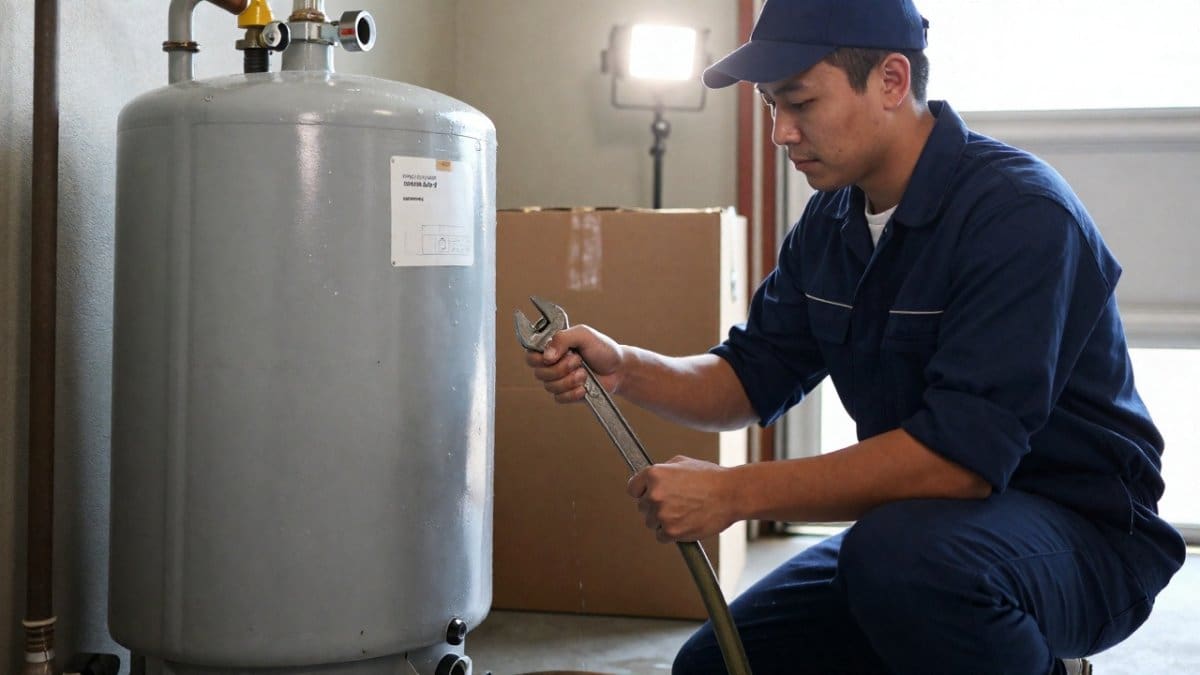
Removal, Disposal, and Permit Handling
Old units are heavy, full of sediment, and often leak during removal. Removal typically includes pumping out the tank and hauling it away. Permits matter more than most homeowners realize: many jurisdictions require one for a replacement. Ask who is filing the paperwork before work begins.
Tank vs Tankless: Choosing the Right System for Your Home
Tank water heaters store hot water in a insulated cylinder and refill as you use it; tankless units heat water on demand as it flows through the exchanger. Neither is universally better. The right choice depends on household size, gas capacity, venting, and how much space you want back.
| Factor | Tank Water Heater | Tankless Water Heater |
|---|---|---|
| Hot water supply | Limited to tank capacity | Continuous, on demand |
| Footprint | Large, floor-standing | Wall-mounted, compact |
| Upfront cost | Lower | Higher |
| Lifespan | Shorter | Longer |
| Best for | Tight budgets, low demand | Families, space savings |
Sizing Your System to Household Hot-Water Demand
Sizing is where most replacement projects quietly fail. A tankless unit is rated by flow rate, measured in gallons per minute, and by temperature rise. Two showers running at once plus a dishwasher can outstrip an undersized unit, which is exactly why hot water “runs cold mid-shower.” A proper sizing assessment considers incoming water temperature and the number of simultaneous fixtures before a unit is recommended. If a contractor quotes a unit without asking how many people live in the home, that is your signal to get a second opinion.
Water Heater Repair vs Replacement: How to Decide
The decision comes down to four variables: the unit’s age relative to its expected service life, how often it has needed repairs, whether the failure is in the tank shell or in a replaceable component, and whether a replacement would also capture efficiency or capacity gains you actually need. Weighing those four factors in order can lead to a clearer decision than starting with the repair price.
Start With Expected Service Life
Service life depends on the unit type, water quality, maintenance, and installation conditions, so the manufacturer’s rating is a useful starting point. Check the manufacturer’s label on the unit for the manufacture date; the first four characters of the serial number usually encode it, and the data plate lists the model and capacity. If the unit is inside the last quarter of its expected life and the repair is more than a minor component, replacement usually wins on total cost.
Separate Terminal Failures From Fixable Ones
A leaking tank is terminal. Once water is weeping through the shell, the steel has corroded from the inside, and no patch or liner restores it reliably. The same is true of a tank that has begun to bulge or a gas valve body that is no longer manufactured for the model. Fixable failures include a failed heating element, a bad thermocouple or igniter, a stuck pressure relief valve, a broken dip tube, a failed thermostat, or a pilot that will not stay lit. Those are component swaps, and on a unit with years of life left they are usually the right call.
A technician who recommends replacing a unit for a failed thermocouple on a five-year-old tank may be overselling, and a second opinion is worth considering.
Use a Repair-Frequency Threshold
Add up what you have spent on repairs and compare it to the installed cost of a new unit.
Factor In Efficiency and Capacity Gains
Replacement is not only about failure. If your current unit is a standard atmospheric-vent tank and you are remodeling, adding a bathroom, or converting appliances to gas, a replacement is the moment to right-size capacity and capture a more efficient model. Conversely, if the existing unit is correctly sized, in good condition, and needs only a minor component, replacing it captures no gain.
A Simple Decision Sequence
- Confirm whether the tank shell itself is leaking. If yes, replace.
- Check the manufacture date against expected service life. If past it, lean toward replacement.
- Count paid repairs in the last two years. Two or more leans toward replacement.
- Compare cumulative repair spending to replacement cost. Near half on an aging unit leans toward replacement.
- If none of the above applies, repair the component and revisit at the next failure.
That sequence gives you a defensible answer before anyone quotes you a price, which is the point. A licensed plumber should be able to walk through the same logic with you on site and show you the evidence, not just assert a conclusion.
What Water Heater Replacement Cost Includes
The installed price of a replacement is the sum of six line items, and understanding each one is how you compare quotes honestly. The unit itself is only part of it. The rest is labor, the permit and inspection, removal and disposal, connection and venting work, and code corrections found on site. Two quotes for the same model can differ because of how the non-equipment items are scoped.
The Six Line Items
- Equipment. The water heater itself, plus any required expansion tank, pressure relief valve, drain pan, and new supply connectors. Tankless units cost more up front than comparable tank units, and high-efficiency or condensing models cost more than standard atmospheric-vent models.
- Labor. Removal of the old unit, installation of the new one, connection of water, gas or electrical, venting, and testing. Labor rises with complexity: a tank-for-tank swap in an accessible garage is the simplest case; a tankless conversion that requires gas line resizing, new venting, and electrical work is the most involved.
- Permit and inspection. Many jurisdictions require a permit for a water heater replacement, and the fee is set by the local authority, not the contractor. The permit should be pulled by the installer and the inspection scheduled as part of the job.
- Removal and disposal. Draining, hauling, and recycling the old unit. Old tanks are heavy and often full of sediment, and disposal is a real cost that some quotes bury and others itemize.
- Connection and venting changes. New shutoff valves, flexible connectors, gas line sizing, flue or vent termination, and electrical disconnects. These are the items most likely to change once the installer sees the existing setup.
- Code corrections. Expansion tank requirements, relief valve discharge routing, seismic strapping where required, and clearance to combustibles. These are not optional, and a quote that omits them is not a complete quote.
How the Variables Move the Number
The largest swing comes from the type of replacement. A tank-for-tank swap of the same fuel type and capacity is the least expensive path because the connections and venting already exist. A switch from tank to tankless adds gas line work, new venting, and often electrical work, which is why the installed price is higher even before you account for the equipment. A switch in fuel type, such as electric to gas, adds the most because it introduces new infrastructure.
Installation conditions matter as much as the equipment. A unit in a basement with a narrow stairwell, a closet with tight clearances, or a location that requires a new vent run takes longer and costs more than a unit in an open garage. A corroded shutoff valve or an undersized gas line discovered on site adds labor and parts. Those are the surprises a pre-install inspection is meant to surface before the work begins.
Why Flat-Rate Beats a Phone Estimate
A phone estimate is a guess about a house the estimator has not seen. Flat-rate pricing by the job, set after an on-site look, puts the variables above into the number before you commit. When you compare quotes, compare the scope line by line: does each quote include the permit, the disposal, the expansion tank, and the code corrections, or are those add-ons? A lower number that excludes half the scope is not a lower price. Ask for the itemized scope in writing, and ask what would change the price after work starts.
How Long Water Heater Replacement Time Takes
A straightforward tank-for-tank swap can take several hours; tankless conversions often run longer because gas line sizing, venting, and electrical work may need changes. The bigger variable is the surprise: a corroded shutoff valve, an undersized gas line, or a vent that no longer meets code can add time. A crew that inspects before the install day gives you a realistic window instead of an optimistic one. Tankless Hot Water Solutions & Plumbing offers one-hour appointment windows.
Who to Call for Water Heater Repair and Replacement
Call a licensed plumbing company that handles both repair and replacement, so the recommendation is not steered by what they sell. Ask three questions: Are your technicians licensed and insured? Are they paid on commission? Will you pull the permit? Non-commissioned technicians are not paid on sales, which reduces the incentive to upsell.
Permits, Code Compliance, and Installation Safety
Permits and code compliance are not bureaucracy; they are the paper trail that proves the gas connection, venting, and pressure relief valve were installed to standard. A properly permitted job gets inspected, and an inspection catches the shortcuts. Gas line work is the part homeowners should scrutinize hardest. Ask whether the technician is qualified for gas piping, and confirm the permit covers it. The U.S. Department of Energy guidance on water heating is a useful primer on how these systems are supposed to perform. Safety details like proper venting and relief valve discharge routing are non-negotiable, and a reputable installer will walk you through them.
Energy Efficiency and Operating-Cost Comparisons
Tankless units avoid standby heat loss because they do not keep a tank hot around the clock. That efficiency shows up on utility bills over time, though the savings depend on usage patterns and local rates. For households that use a lot of hot water, the operating-cost gap widens; for light users, it narrows. The ENERGY STAR program maintains efficiency criteria for water heaters worth checking before you buy. Pair efficiency with correct sizing and you get the savings; skip the sizing and you get cold showers.
Warranty Coverage and Post-Installation Support
Warranty coverage splits into two parts: the manufacturer’s warranty on the unit and the installer’s warranty on labor. Read both. Manufacturer terms often require professional installation and may prorate coverage after the first few years. Labor warranties vary widely, so compare the terms carefully. Ask what happens if a fitting leaks a month after installation. A company that answers clearly and in writing is the one you want. Keep your permit and inspection records; some warranty claims require them.
Scheduling Your Water Heater Replacement Service
Book the replacement before the old unit fails completely if you can. A planned swap is cheaper, calmer, and easier to schedule than an emergency on a holiday weekend. When you call, have the unit’s age, model number, and a photo of the installation area ready. Ask about the appointment window, the permit, and the disposal fee up front. If you are comparing quotes, compare the scope, not just the number. The U.S. Environmental Protection Agency’s WaterSense program offers background on household water efficiency that helps you ask better questions.
Hot water should not be a gamble. If your unit is leaking, aging, or running cold mid-shower, a licensed plumber can assess it and advise on repair versus replacement. Tankless Hot Water Solutions & Plumbing offers one-hour appointment windows, flat-rate pricing by the job, non-commissioned technicians, and zero-cost on-site visits within our service area. Get started with Tankless Hot Water Solutions & Plumbing and schedule a replacement.
Frequently Asked Questions
How much does professional water heater replacement cost?
Water heater replacement cost varies based on unit type, size, fuel source, and installation complexity. Tank replacements generally cost less upfront than tankless systems, which may require gas line and venting upgrades in some homes. Ask whether labor, permits, and old-unit disposal are included in a quote. Tankless Hot Water Solutions & Plumbing provides transparent flat-rate pricing by the job, so the number you approve is the number you pay. Request a quote for your specific setup.
How long does water heater replacement time usually take?
A standard tank water heater swap can take several hours. Tankless installations often run longer because they may involve gas line resizing, new venting, and electrical work. Factors like cramped closet space, code upgrades, or unexpected pipe corrosion can extend the timeline. Ask your provider for a realistic window before the crew arrives so you can plan your day.
How do I know whether my water heater needs repair or replacement?
Age is the first checkpoint, since tank units have a finite service life. If your unit is past that range and showing leaks, rusty water, or inconsistent heating, replacement usually makes more financial sense than repeated repairs. A single failed thermocouple or heating element on a younger unit is worth fixing. A licensed technician can assess the unit and give you a repair quote alongside a replacement quote so you can compare honestly.
Does water heater replacement include removal and disposal of the old unit?
Reputable providers include draining, disconnecting, hauling away, and properly disposing of the old unit in their replacement quote. Confirm this before booking, because some estimates exclude disposal. Also ask whether the quote covers permit fees and any code-required upgrades like expansion tanks or new shutoff valves. A flat-rate quote should list what is included so nothing appears on the final bill unexpectedly.
What should I ask a plumber before hiring them to replace my water heater?
Ask whether they are licensed and insured, whether technicians are qualified for gas line work, and whether the quote is flat-rate or hourly. Confirm that permit fees and old-unit disposal are included. Ask if technicians earn commission, since that affects whether you get pressured into add-ons. Finally, ask about warranty terms on both labor and parts. Tankless Hot Water Solutions & Plumbing uses non-commissioned technicians and provides upfront flat-rate pricing.
